/* C program to display a diamond using arrays */
#include< iostream.h>
#include< conio.h>
void main()
{
int i,j;
clrscr();
int no;
cout< < "Enter A Value";
cin>>no;
for(i=no;i>=1;i--)
{
cout< < endl;
for(int k=1;k< =i;k++)
cout< < " ";
for(j=i;j< =no;j++)
cout< < "*";
for(j=i;j< no;j++)
cout< < "*";
}
//SECOND PART
for(i=no;i>=1;i--)
{
cout< < endl;
cout< < " ";
for(int k=no;k>=i;k--)
cout<<" ";
for(j=i-1;j>=1;j--)
cout< < "*";
for(j=i-1;j>1;j--)
cout<<"*";
}
getch();
}
Sunday, December 21, 2008


Call By Reference in C
/* Program for inerchanging two numbers demonstrating Call By Reference in C */
#include<>
#include<>
void swap(int *,int *);
void main()
{
int x,y;
x=15;y=20;
clrscr();
printf("x=%d,y=%d\n",x,y);
swap(&x,&y);
//printf("\n%x %x",&x,&y);
printf("\n after interchanging x=%d,y=%d\n",x,y);
getch();
}
void swap(int *u,int *v)
{
int temp;
temp=*u;
*u=*v;
*v=temp;
return;
}
#include<>
#include<>
void swap(int *,int *);
void main()
{
int x,y;
x=15;y=20;
clrscr();
printf("x=%d,y=%d\n",x,y);
swap(&x,&y);
//printf("\n%x %x",&x,&y);
printf("\n after interchanging x=%d,y=%d\n",x,y);
getch();
}
void swap(int *u,int *v)
{
int temp;
temp=*u;
*u=*v;
*v=temp;
return;
}
Call by Values in C
/* Program on interchanging two numbers demonstrating Call By Values in C*/
#include< stdio.h>
#include< conio.h>
void main()
{
int x,y;
x=15;y=20;
clrscr();
printf("x=%d,y=%d\n",x,y);
swap(x,y);
printf("\n after interchanging x=%d,y=%d\n",x,y);
getch();
}
swap(int u,int v)
{
int temp;
temp=u;
u=v;
v=temp;
return;
}
#include< stdio.h>
#include< conio.h>
void main()
{
int x,y;
x=15;y=20;
clrscr();
printf("x=%d,y=%d\n",x,y);
swap(x,y);
printf("\n after interchanging x=%d,y=%d\n",x,y);
getch();
}
swap(int u,int v)
{
int temp;
temp=u;
u=v;
v=temp;
return;
}
Pointers example
/* Example of pointers in C. Thsi program uses a function to modify a string using pointers */
#include< stdio.h>
#include< conio.h>
void main()
{
void getstr(char *ptr_str,int *ptr_int);
int var=5;
char *pstr="lionel";
clrscr();
getstr(pstr,&var);
printf("The value of var after modification using pointer in a function is %d,var");
}
void getstr (char *ptr_str,int *ptr_int)
{
printf("%s\n",ptr_str);
*ptr_int=6;
getch();
}
#include< stdio.h>
#include< conio.h>
void main()
{
void getstr(char *ptr_str,int *ptr_int);
int var=5;
char *pstr="lionel";
clrscr();
getstr(pstr,&var);
printf("The value of var after modification using pointer in a function is %d,var");
}
void getstr (char *ptr_str,int *ptr_int)
{
printf("%s\n",ptr_str);
*ptr_int=6;
getch();
}
Two Dimentional array in C
/* C program to input and display a 2-d array*/
#include< stdio.h>
#include< conio.h>
void main()
{
int num[3][3],i,j;
clrscr();
for(i=0;i< 3;i++)
{
for(j=0;j< 3;j++)
{
scanf("%d",&num[i][j]);
}
}
for(i=0;i< 3;i++)
{
for(j=0;j< 3;j++)
{
printf("\n%d",num[i][j]);
}
printf("\n");
}
getch();
}
#include< stdio.h>
#include< conio.h>
void main()
{
int num[3][3],i,j;
clrscr();
for(i=0;i< 3;i++)
{
for(j=0;j< 3;j++)
{
scanf("%d",&num[i][j]);
}
}
for(i=0;i< 3;i++)
{
for(j=0;j< 3;j++)
{
printf("\n%d",num[i][j]);
}
printf("\n");
}
getch();
}
Thursday, December 11, 2008
Carlsberg launches Web-TV channel about football and fan life.
Recently Carlsberg Brewery launched a football web-TV-channel partofthegame.tv.

They launched 5 channels showing all aspects about football from the classic football matches to life as a fan.
Be sure not to miss the video clips about football funnies and rituals from the Football Magic channel or the bizarre story about fans in the stand and how fan culture sometimes go beyond reason.
As an extra feature you can upload your own favourite football and fan moments.
Its an amazing site with loads of features present in it. So log on to partofthegame.tv and experience the diference.
Be sure not to miss the video clips about football funnies and rituals from the Football Magic channel or the bizarre story about fans in the stand and how fan culture sometimes go beyond reason.
As an extra feature you can upload your own favourite football and fan moments.
Its an amazing site with loads of features present in it. So log on to partofthegame.tv and experience the diference.

Thursday, October 2, 2008
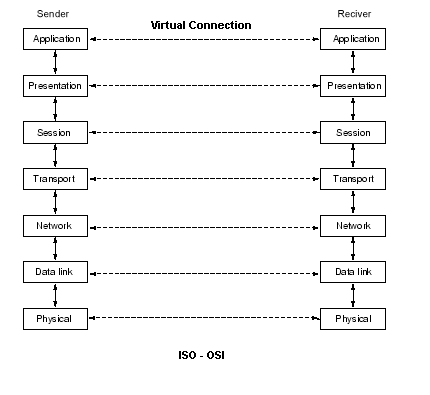
ISO - OSI Model
/* Draw ISO - OSI Model using C */
#include< stdlib.h>
#include< graphics.h>
#include< conio.h>
#include< stdio.h>
void main()
{
int driver, mode;
int i,j;
driver = DETECT;
initgraph(&driver,&mode,"");
outtextxy(250,450,"ISO OSI Model");
delay(2000);
outtextxy(90,30,"Sender");
delay(500);
setcolor(6);
for(i=50;i< =350;i+=50)
{
rectangle(200,i,50,i+30);
delay(500);
}
setcolor(10);
outtextxy(70,60,"Application");
delay(500);
outtextxy(70,110,"Presentation");
delay(500);
outtextxy(70,160,"Session");
delay(500);
outtextxy(70,210,"Transport");
delay(500);
outtextxy(70,260,"Network");
delay(500);
outtextxy(70,310,"Data Link");
delay(500);
outtextxy(70,360,"Physical");
delay(500);
setcolor(15);
outtextxy(390,30,"Receiver");
delay(500);
setcolor(6);
for(i=50;i< =350;i+=50)
{
rectangle(350,i,500,i+30);
delay(500);
}
setcolor(10);
outtextxy(370,60,"Application");
delay(500);
outtextxy(370,110,"Presentation");
delay(500);
outtextxy(370,160,"Session");
delay(500);
outtextxy(370,210,"Transport");
delay(500);
outtextxy(370,260,"Network");
delay(500);
outtextxy(370,310,"Data Link");
delay(500);
outtextxy(370,360,"Physical");
delay(500);
// sender Lines
line(120,80,120,100);
delay(500);
line(120,130,120,150);
delay(500);
line(120,180,120,200);
delay(500);
line(120,230,120,250);
delay(500);
line(120,280,120,300);
delay(500);
line(120,330,120,350);
delay(500);
line(120,380,120,400);
delay(500);
// Physical Connection
line(120,400,420,400);
// Receiver Lines
line(420,380,420,400);
delay(500);
line(420,330,420,350);
delay(500);
line(420,280,420,300);
delay(500);
line(420,230,420,250);
delay(500);
line(420,180,420,200);
delay(500);
line(420,130,420,150);
delay(500);
line(420,80,420,100);
//virtual connection
setcolor(15);
delay(500);
outtextxy(210,35,"Virtual Connection");
delay(1000);
for(j=65;j< =365;j+=50)
{
for(i=0;i< 15;i++)
{
setcolor(i);
line(200,j,230,j);
delay(10);
line(235,j,265,j);
delay(10);
line(270,j,300,j);
delay(10);
line(305,j,335,j);
delay(10);
line(340,j,350,j);
delay(10);
}
}
delay(500);
}
/*

*/
#include< stdlib.h>
#include< graphics.h>
#include< conio.h>
#include< stdio.h>
void main()
{
int driver, mode;
int i,j;
driver = DETECT;
initgraph(&driver,&mode,"");
outtextxy(250,450,"ISO OSI Model");
delay(2000);
outtextxy(90,30,"Sender");
delay(500);
setcolor(6);
for(i=50;i< =350;i+=50)
{
rectangle(200,i,50,i+30);
delay(500);
}
setcolor(10);
outtextxy(70,60,"Application");
delay(500);
outtextxy(70,110,"Presentation");
delay(500);
outtextxy(70,160,"Session");
delay(500);
outtextxy(70,210,"Transport");
delay(500);
outtextxy(70,260,"Network");
delay(500);
outtextxy(70,310,"Data Link");
delay(500);
outtextxy(70,360,"Physical");
delay(500);
setcolor(15);
outtextxy(390,30,"Receiver");
delay(500);
setcolor(6);
for(i=50;i< =350;i+=50)
{
rectangle(350,i,500,i+30);
delay(500);
}
setcolor(10);
outtextxy(370,60,"Application");
delay(500);
outtextxy(370,110,"Presentation");
delay(500);
outtextxy(370,160,"Session");
delay(500);
outtextxy(370,210,"Transport");
delay(500);
outtextxy(370,260,"Network");
delay(500);
outtextxy(370,310,"Data Link");
delay(500);
outtextxy(370,360,"Physical");
delay(500);
// sender Lines
line(120,80,120,100);
delay(500);
line(120,130,120,150);
delay(500);
line(120,180,120,200);
delay(500);
line(120,230,120,250);
delay(500);
line(120,280,120,300);
delay(500);
line(120,330,120,350);
delay(500);
line(120,380,120,400);
delay(500);
// Physical Connection
line(120,400,420,400);
// Receiver Lines
line(420,380,420,400);
delay(500);
line(420,330,420,350);
delay(500);
line(420,280,420,300);
delay(500);
line(420,230,420,250);
delay(500);
line(420,180,420,200);
delay(500);
line(420,130,420,150);
delay(500);
line(420,80,420,100);
//virtual connection
setcolor(15);
delay(500);
outtextxy(210,35,"Virtual Connection");
delay(1000);
for(j=65;j< =365;j+=50)
{
for(i=0;i< 15;i++)
{
setcolor(i);
line(200,j,230,j);
delay(10);
line(235,j,265,j);
delay(10);
line(270,j,300,j);
delay(10);
line(305,j,335,j);
delay(10);
line(340,j,350,j);
delay(10);
}
}
delay(500);
}
/*
*/
PC to PC Communication using RS-232
/*Aim: PC to PC Communication using RS-232 in 'C'. */
#include
#include
#define COM1 0
#define DATA_READY 0x100
#define SETTINGS ( 0x80 | 0x02 | 0x00 | 0x00)
int main(void)
{
int in, out, status;
bioscom(0, SETTINGS, COM1); /*initialize the port*/
cprintf("Data sent to you: ");
while (1)
{
status = bioscom(3, 0, COM1); /*wait until get a data*/
if (status & DATA_READY)
if ((out = bioscom(2, 0, COM1) & 0x7F) != 0) /*input a data*/
putch(out);
if (kbhit())
{
if ((in = getch()) == 27) /* ASCII of Esc*/
break;
bioscom(1, in, COM1); /*output a data*/
}
}
return 0;
}
/* OUTPUT:-
Data sent to you: HI...how are you??
*/
#include
#include
#define COM1 0
#define DATA_READY 0x100
#define SETTINGS ( 0x80 | 0x02 | 0x00 | 0x00)
int main(void)
{
int in, out, status;
bioscom(0, SETTINGS, COM1); /*initialize the port*/
cprintf("Data sent to you: ");
while (1)
{
status = bioscom(3, 0, COM1); /*wait until get a data*/
if (status & DATA_READY)
if ((out = bioscom(2, 0, COM1) & 0x7F) != 0) /*input a data*/
putch(out);
if (kbhit())
{
if ((in = getch()) == 27) /* ASCII of Esc*/
break;
bioscom(1, in, COM1); /*output a data*/
}
}
return 0;
}
/* OUTPUT:-
Data sent to you: HI...how are you??
*/
DIJKSRTRA'S ALGORITHM
/*Implementation of Shortest Path Algorithm(DIJKSRTRA's ALGORITHM) in C*/
#include< stdio.h>
#include< conio.h>
#include< process.h>
#include< string.h>
#include< math.h>
#define IN 99
#define N 6
int dijkstra(int cost[][N], int source, int target);
void main()
{
int cost[N][N],i,j,w,ch,co;
int source, target,x,y;
clrscr();
printf("\tShortest Path Algorithm(DIJKSRTRA's ALGORITHM\n\n");
for(i=1;i< N;i++)
for(j=1;j< N;j++)
cost[i][j] = IN;
for(x=1;x< N;x++)
{
for(y=x+1;y< N;y++)
{
printf("Enter the weight of the path between node %d and %d: ",x,y);
scanf("%d",&w);
cost [x][y] = cost[y][x] = w;
}
printf("\n");
}
printf("\nEnter The Source:");
scanf("%d", &source);
printf("\nEnter The target");
scanf("%d", &target);
co = dijsktra(cost,source,target);
printf("\nShortest Path: %d",co);
getch();
}
int dijsktra(int cost[][N],int source,int target)
{
int dist[N],prev[N],selected[N]={0},i,m,min,start,d,j;
char path[N];
for(i=1;i< N;i++)
{
dist[i] = IN;
prev[i] = -1;
}
start = source;
selected[start]=1;
dist[start] = 0;
while(selected[target] ==0)
{
min = IN;
m = 0;
for(i=1;i< N;i++)
{
d = dist[start] +cost[start][i];
if(d< dist[i]&&selected[i]==0)
{
dist[i] = d;
prev[i] = start;
}
if(min>dist[i] && selected[i]==0)
{
min = dist[i];
m = i;
}
}
start = m;
selected[start] = 1;
}
start = target;
j = 0;
while(start != -1)
{
path[j++] = start+65;
start = prev[start];
}
path[j]='\0';
strrev(path);
printf("%s", path);
return dist[target];
}
/***** Output *********
Shortest Path Algorithm(DIJKSRTRA's ALGORITHM
Enter the weight of the path between node 1 and 2: 2
Enter the weight of the path between node 1 and 3: 3
Enter the weight of the path between node 1 and 4: 4
Enter the weight of the path between node 1 and 5: 5
Enter the weight of the path between node 2 and 3: 5
Enter the weight of the path between node 2 and 4: 2
Enter the weight of the path between node 2 and 5: 3
Enter the weight of the path between node 3 and 4: 1
Enter the weight of the path between node 3 and 5: 4
Enter the weight of the path between node 4 and 5: 5
Enter The Source:2
Enter The target4
CE
Shortest Path: 2
*/
#include< stdio.h>
#include< conio.h>
#include< process.h>
#include< string.h>
#include< math.h>
#define IN 99
#define N 6
int dijkstra(int cost[][N], int source, int target);
void main()
{
int cost[N][N],i,j,w,ch,co;
int source, target,x,y;
clrscr();
printf("\tShortest Path Algorithm(DIJKSRTRA's ALGORITHM\n\n");
for(i=1;i< N;i++)
for(j=1;j< N;j++)
cost[i][j] = IN;
for(x=1;x< N;x++)
{
for(y=x+1;y< N;y++)
{
printf("Enter the weight of the path between node %d and %d: ",x,y);
scanf("%d",&w);
cost [x][y] = cost[y][x] = w;
}
printf("\n");
}
printf("\nEnter The Source:");
scanf("%d", &source);
printf("\nEnter The target");
scanf("%d", &target);
co = dijsktra(cost,source,target);
printf("\nShortest Path: %d",co);
getch();
}
int dijsktra(int cost[][N],int source,int target)
{
int dist[N],prev[N],selected[N]={0},i,m,min,start,d,j;
char path[N];
for(i=1;i< N;i++)
{
dist[i] = IN;
prev[i] = -1;
}
start = source;
selected[start]=1;
dist[start] = 0;
while(selected[target] ==0)
{
min = IN;
m = 0;
for(i=1;i< N;i++)
{
d = dist[start] +cost[start][i];
if(d< dist[i]&&selected[i]==0)
{
dist[i] = d;
prev[i] = start;
}
if(min>dist[i] && selected[i]==0)
{
min = dist[i];
m = i;
}
}
start = m;
selected[start] = 1;
}
start = target;
j = 0;
while(start != -1)
{
path[j++] = start+65;
start = prev[start];
}
path[j]='\0';
strrev(path);
printf("%s", path);
return dist[target];
}
/***** Output *********
Shortest Path Algorithm(DIJKSRTRA's ALGORITHM
Enter the weight of the path between node 1 and 2: 2
Enter the weight of the path between node 1 and 3: 3
Enter the weight of the path between node 1 and 4: 4
Enter the weight of the path between node 1 and 5: 5
Enter the weight of the path between node 2 and 3: 5
Enter the weight of the path between node 2 and 4: 2
Enter the weight of the path between node 2 and 5: 3
Enter the weight of the path between node 3 and 4: 1
Enter the weight of the path between node 3 and 5: 4
Enter the weight of the path between node 4 and 5: 5
Enter The Source:2
Enter The target4
CE
Shortest Path: 2
*/
Calculation Of CRC
/* Calculation of CRC (Cyclic Redundancy Check)*/
#include< stdlib.h>
#include< conio.h>
#include< stdio.h>
void main()
{
int i,j,n,g,a,arr[20],gen[20],b[20],q[20],s;
clrscr();
printf("Transmitter side:");
printf("\nEnter no. of data bits:");
scanf("%d",&n);
printf("Enter data:");
for(i=0;i< n;i++)
scanf("%d",&arr[i]);
printf("Enter size of generator:");
scanf("%d",&g);
do{
printf("Enter generator:");
for(j=0;j< g;j++)
scanf("%d",&gen[j]);
}
while(gen[0]!=1);
printf("\n\tThe generator matrix:");
for(j=0;j< g;j++)
printf("%d",gen[j]);
a=n+(g-1);
printf("\n\tThe appended matrix is:");
for(i=0;i< j;++i)
arr[n+i]=0;
for(i=0;i< a;++i)
printf("%d",arr[i]);
for(i=0;i< n;++i)
q[i]= arr[i];
for(i=0;i< n;++i)
{
if(arr[i]==0)
{
for(j=i;j< g+i;++j)
arr[j] = arr[j]^0;
}
else
{
arr[i] = arr[i]^gen[0];
arr[i+1]=arr[i+1]^gen[1];
arr[i+2]=arr[i+2]^gen[2];
arr[i+3]=arr[i+3]^gen[3];
}
}
printf("\n\tThe CRC is :");
for(i=n;i < a;++i)
printf("%d",arr[i]);
s=n+a;
for(i=n;i< s;i++)
q[i]=arr[i];
printf("\n");
for(i=0;i< a;i++)
printf("%d",q[i]);
getch();
}
/* Output
Transmitter side:
Enter no. of data bits:8
Enter data:1 0 1 0 0 0 0 1
Enter size of generator:4
Enter generator:1 0 0 1
The generator matrix:1001
The appended matrix is:10100001000
The CRC is :111
10100001111
*/
#include< stdlib.h>
#include< conio.h>
#include< stdio.h>
void main()
{
int i,j,n,g,a,arr[20],gen[20],b[20],q[20],s;
clrscr();
printf("Transmitter side:");
printf("\nEnter no. of data bits:");
scanf("%d",&n);
printf("Enter data:");
for(i=0;i< n;i++)
scanf("%d",&arr[i]);
printf("Enter size of generator:");
scanf("%d",&g);
do{
printf("Enter generator:");
for(j=0;j< g;j++)
scanf("%d",&gen[j]);
}
while(gen[0]!=1);
printf("\n\tThe generator matrix:");
for(j=0;j< g;j++)
printf("%d",gen[j]);
a=n+(g-1);
printf("\n\tThe appended matrix is:");
for(i=0;i< j;++i)
arr[n+i]=0;
for(i=0;i< a;++i)
printf("%d",arr[i]);
for(i=0;i< n;++i)
q[i]= arr[i];
for(i=0;i< n;++i)
{
if(arr[i]==0)
{
for(j=i;j< g+i;++j)
arr[j] = arr[j]^0;
}
else
{
arr[i] = arr[i]^gen[0];
arr[i+1]=arr[i+1]^gen[1];
arr[i+2]=arr[i+2]^gen[2];
arr[i+3]=arr[i+3]^gen[3];
}
}
printf("\n\tThe CRC is :");
for(i=n;i < a;++i)
printf("%d",arr[i]);
s=n+a;
for(i=n;i< s;i++)
q[i]=arr[i];
printf("\n");
for(i=0;i< a;i++)
printf("%d",q[i]);
getch();
}
/* Output
Transmitter side:
Enter no. of data bits:8
Enter data:1 0 1 0 0 0 0 1
Enter size of generator:4
Enter generator:1 0 0 1
The generator matrix:1001
The appended matrix is:10100001000
The CRC is :111
10100001111
*/
Subscribe to:
Posts (Atom)